

In today’s entry, the biggest de-construction (and re-construction) of Zan, ‘seductive men’, and what it means to be magnetic I’ve ever attempted.
This is the crowning seeing of my time at Ars Amorata. And a love story: to you, to me, to everyone who features in these lines. Obviously, you will get stabbed with the prick of the sword a dozen times before it’s over. Consider it one of my parting gifts!
Now, ‘archetypal psychology and the Greek Gods’, you say. ‘Isn’t that a bit niche?’
Nope. The topic of sex — who gets it, who misses out, who’s satisfied and who’s frustrated, and who among us gets to choose our partners — is a topic that cuts right through the human race and cuts, also, into the Gods.
Now before we start, let me straighten my spine, and take a breath:
Sing through me, oh Muses; all of you, nine —
And above all, beloved Erato, who sings the sweet songs of longing,
And of the agony of desire…
Come, bring me words from heaven and from the black of the earth:
To bring justice to what I’ve seen, I cannot do it alone.
* * *
Apollo 13:
Or, When ‘Getting Better With Women’ Makes Her Run Away From You and Turn Herself Into A Tree
The whole concept of ‘getting better with women’ began to seem questionnable to me. Strangely, I found myself unable to stomach being around men obsessed with our tribe’s central project.
And the more, and the faster, a man wanted to ‘get better with women’, the fishier I saw it all. But I felt connected again when the men became honest.
Some awkward questions I enjoyed asking myself:
> What specific social power are you looking to perfect here? Name it, let us in on your little fantasy!
> What humiliating scenario do you want so much to avoid? It will always be your Achilles’ heel.
> What happens to all the women you meet during your ‘ten-thousand hours’? Accountability check.
> Are they extras in your little hero’s journey, or protagonists of their own? Hm.
> Let’s say you leave every woman you date better than you found her (the ethical masterstroke!), does that make them like cats you pick up from the side of a highway, or do you pay each woman, from the very beginning, the respect that she might love you or feed you self-forgetting flowers or change you into a pig?
> And what do you actually want with women after your magical feat of being ‘good’ with them? Are the benefits of this for you, or for someone else?
> Would you show me, or any woman you became ‘intimate’ with, the dark forest of your insufficiency, and the extent of your vanity?
I say all this because, when I was flying around on some dating/self-improvement journey, I had a lot of fun but bottomed out like a village drunk after too many bottles of consumption. I was then awoken by an idea from Ernest Becker that, in a world in which we’ve severed belief in the sublime, we’ll either project Goddesses upon women (and try to merge with them) or we’ll consume women (so as to feel a bolt of omnipotence flash throughout ourselves).
I think we all want to get better with women for the simple mystery some call connection but, from what I’ve seen across these rocky lands and loud-roaring seas, there’s a big way ‘getting better with women’ makes a man less of a man, and makes connection more a bead in an abacus than a spirit we all live in. As such, the man of ‘mastery’ lives as a detached sort of Ruler, fiddling in the play of the peasantry from the safety of some Royal Box.
The unstated unconscious goal of the man who craves mastery is to arrange the order of the cosmos: to pattern-match his way to the dopamine drop, and avoid the lions and the cages and the bitter stench of loss.
Some people hate it when I make this attack, but the reason I keep trying to slice through self-improvement is to let us see what’s actually happening. Beauty, love, intimacy is NOW and self-improvement turns wholeness into a goal, and delays it to some always-retreating future. You also know it’s unsexy (which is why you never show what you’re reading in public).
It doesn’t matter how often I pull his pants down, though, for there’s a fearsome God who rules our culture and keeps all of us, except a few untainted fellows, firmly in his grip. The quality of this God feels baked into evolution, and after every knockdown he turns us always back onto self-improvement, onto the myth there’s a skillset we can master that will bring the universe, and all its inhabiting women, into a pleasing sort of harmony.
The idea you can build a skillset to be a more effective, more beautiful version of yourself — that you can cultivate a skillset to master the orbit of women — is a logic belonging to one God only, and that one God is Apollo. And the harder you believe in this logic, the more you will suppress every other living God inside you.
—
I can be charitable to a half-brother, though. Building skill in the real-world is not entirely fruitless. Here is my brief translation of Apollo’s long syllabus for dating:
1. There are probably 10-12 linguistic and perspectival tweaks that will have an outsized effect on your communication with women. As taught in Zan’s Essentials.
2. Find your three or four most unattractive traits (your blindspots), and resolve what you need to resolve to stop doing them. This is where my dating-coach phase landed, and the core ‘unattractive trait’ is what this piece is about.
3. Learn to see women beyond Aphrodite-blindness, and you will gain in choice. Erotic literacy, lesson #1.
The rest is just making an effort.
Achieve this, and you’ll be in the top 10% of mortals within months. When it comes to modern dating, that is.
—
But if Apollo has captured you beyond this basic three-pronged syllabus, and you still want to ‘get better’, you might wonder how deeply your investment in ‘growth’ is rooted in vanity or self-deficiency, or in vast blind rage at the world, rather than love for the woman right beside you.
My hunch is that Zan, when he first came out of the forest and made sense of the tides of women, reached for the God Apollo. I sense Apollo’s tendrils deep in him, and his philosophy still speaks in Apollonian lines: ‘restore beauty to its rightful place’, ‘the harmony and rhythm of an interaction’, ‘the greatest lover a woman has ever known’—the superlative is the hallmark of Apollo! Zan loves good technique and the deftness of an effective move. He loves it! And the God that inhabited Zan bleeds, unconsciously, into us. I’ve echoed Apollo’s decree over the years: we must strive for mastery to win beauty’s greatest spoils. You might consider how Apollo lives in you, how you competed throughout your schooling, how you craved victory in anything and everything, how still you chisel and carve yourself into someone outwardly admirable. Oh, Apollo, seducer of men, the seduction of mastery! So skillful you become prophetic. The black-belt, the James-Bond, the Jedi.
I, too, have given great advice over the years, but advice still constrained by the Apollonian view. Advice still transmitting the message beneath the message:
That if I become as ‘good’ with women as he is, I will attract my Aphrodite!
* * *
What is Meant by ‘Stripping Away’
So let’s say we want an Aphrodite.
Sure, we’re all conscious men here. We all see through the hot-girl fallacy, we want a real and layered woman, constituted of a range of Goddesses, unique and perpendicular, and with more heirloom texture about her still.
But let’s say it’s Friday night, and you want to win in the field of Aphrodite. You just can’t help yourself. You want the hot pink girl in the club, the one with the curves and the laughter and the breasts, you want to beat your loudmouthed friend to the approach, you want to snag her number, snag a slatherflecked kiss with her in the bathroom line, and you want to be seen and unseen—talked about, scandal-making—as you wheel her down the club’s steps and into the Uber home…
Who is the best God for that? Who is going to win?
I can tell you one thing. It will not be Apollo.
In fact, every woman Apollo ever pursued hated him.
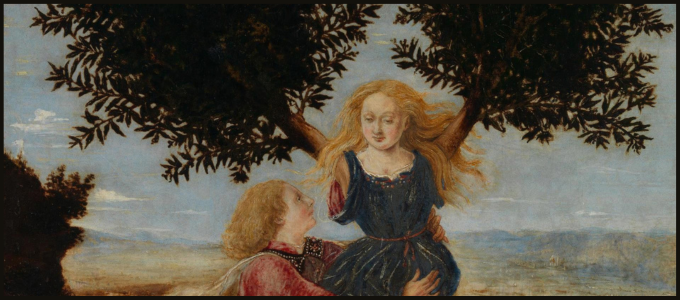
Daphne was already hard to get and Apollo, conditioned by hunting, saw her as prey. The aesthete, the lover of beauty, Apollo could see the improvements he’d make to Daphne even as he chased her. And the more he chased her, the more she ran. ‘You have no idea what you’re fleeing,’ he cried out. And rather than be taken by this pursuer, Daphne prayed to all the Gods that she be turned, right then and there, into a tree. And even changed to wood she cringes as Apollo smothers kisses all over her captive bark. ‘Although you cannot be my bride,’ he says, ‘you will assuredly be my own tree.’ And Apollo takes Daphne’s new-grown laurel leaves, and he wears them as his crown.
To win over Cassandra, Apollo gives her the gift of prophecy. She receives the gift, but as a girl is prone, you know, on Apollo she changes her mind. She just isn’t into him, and she lets him down: that must have been slightly vulnerable. In his rage, that he couldn’t buy her affections even with gifts of Godly magic, Apollo finds her, opens her mouth, spits in it, and curses for eternity that her prophecy never be believed. You’ve seen what happens when a woman speaks her truth and everyone in the world thinks she’s mad. Cassandra dies in a fit of screaming—Apollo, ever the ‘nice guy’, I guess invented the covert contract.
Apollo then sees Marpessa, and falls in love with her on the spot. She’s impressed, but she’s with Idas, a mortal, and she’s torn. A love-triangle. And love-triangles in Greece seem to all go the same way: to the courtroom of Zeus and to Zeus’s command. Zeus orders Marpessa to choose: Apollo or Idas, God or mortal? She hesitates a second, her bosom no doubt quickening beneath her robe, her pulse aflame and askew. She chooses mortal. She knows, she says, seeing Apollo in his flawless grandeur, that his very love for beauty will cause him to leave her as her beauty fades. How can a woman ever feel free under the weight of such expectations?
Now Apollo does seduce Coronis, and she’s pregnant with his child. You’d think it’s a dead cert for our hero now, until Coronis, her belly vast with the fruit of our seed, cheats on the God Apollo… while pregnant… with a mortal! As the crow informs Apollo of the adulterous scene he saw through the bedroom window, Apollo murders Coronis in a fit of rage. But instantly, he mourns. It’s already too late to bring her back. Already too late for forgiveness, or bring back his now-dead child.
Oh, the entitlement of men, who’ve fared so well in other domains! Unable to handle the mysterious ways they keep closing women’s hearts. Among the hazards of beauty lie pride and lie grief: you became so beautiful, so good and so deserving, that in those shadows you grew entitled to her heart.
And what of Aphrodite? The Goddess of Love who bears children with almost anyone? There is no recorded story between far-working Apollo and the Goddess Aphrodite. He wants his eternal beauty, to have and to behold. Aphrodite is desire itself—she exists to be entered, not placed on arm nor on pedestal nor at home. There is no situation in which the two ever meet.
Apollo’s affections, it seems, were returned by only one person: Hyacinthus. A man. And even then, a sporting accident, Apollo hurls a discus into his beautiful face. Hyacinthus drops dead.
—
There was a sharp exchange last month in the Guild. One man shared the what and how of a moment with the beautiful cashier at his grocery store. It seemed to him that he was applying the Ars Amorata well. Unfortunately for him, the girl was non-plussed.
His colleague’s response:
‘I can sense you’re using your flirting as a shield, and the better and more daring your flirting, the more you’re telling her, under the surface of it, to keep away.’ It’s an everyday scene: as our friend grows nervous in his rising desire, he pulls on the robes of Apollo and reaches for his silver bow. But the moves he makes to connect with her — the ‘cocky-funny’, the well-sketched lines from the book of love — all become shields that keep her away.
As I said, I sense Zan leant heavily into the Apollo archetype, mastering classical arts of seduction, drinking from the wells of historical and literary models, filmstars, anyone he could find who seemed to perfect this courtly art. As such, by his own admission, he became a skilled manipulator, a puppeteer, and Zan’s actual message—what happens, obliquely and nebulously, by the end of his book—is the enshrining of Apollo’s dismemberment; that all conceit and application be eroded; the man stripped to something more essential—his mortality, perhaps; that the lover loses his footing; that the seducer be seduced.
Meanwhile the rest of us love a good film with a ladies’ man. Competence porn, I call it. Take Vicky Christina Barcelona. We adore Acts One and Two, when the seducer appears omnipotent and we put ourselves in his shoes. We want to approach the two young women at the table and invite them to Oviedo, by private plane, and into a weekend of wine and banquets and threesomes. We ignore the unraveling of the ladies’ man, the vacant centre of the Don Juan, his incapacity to really relate, which is the central truth in any credible drama about seduction, and has always been the main lesson.
Many claim that Zan is Dionysus—the gypsy-pirate, the bohemian, who carts you away into some timeless realm where boundaries melt and you’ll know ecstasy and oneness and freedom and Joseph Campbell’s bliss. Maybe in the early days, when Ars Amorata was a risk and there weren’t yet bills or tomorrows, Lord Dionysus emerged. But the seducer Zan doesn’t do that. He arranges the orbit and rhythm of comets and planets in a room; any lure of Dionysus was trinketry, part of an Apollonian disguise. Sure, there was participation mystique. Sure, we all ran amok in those rites of the old days. But you can tell a man’s God by the tales he tells at breakfast, and Zan’s stories are not about rock and roll, about losing his mind in some rave hedonism, about fuck, you wouldn’t believe it last night, I just dissolved! The character of Zan is always composed, delighting in the potentiality, the quantum entanglement he sees surfacing in a crowded cosmos. It’s ordered, planetary vision. With rare glimpses of Beauty the result.
I’d say that, for a long time, Apollo was Zan’s scaffolding for early results, the God of an outsider trying to find his way in, and he’s remained, to a degree, Zan’s basis for seeing, as he remains the masterful model for the rest of us. But any success Zan had with women came through the erosion of Apollo, not through further mastery of him. And it’ll be the same for each of us.
I guess event the ancients knew that a real relationship to love meant stripping away the most masterful, the most unattractive, of the Gods.
* * *
The Race for Aphrodite
Zan always said there were three men who impressed him with the effect they have on women. Lately, there’s been another.
Now when I say impressed, I don’t mean technically superior Apollos in some never-seen-before way. I’d say these men short-circuited Zan’s vision of how attraction works and ripped his Apollo-myth apart. They operated from a place for which Zan hadn’t yet built bearings, and they left him scratching his head.
As you read: which of the following have you glimpsed?
—
1. The Bus Driver.
Catchphrase: she doesn’t just want the bulge in the back of your pants, she wants the bulge in the front of them!
This God is Ares.
The warrior, entirely direct, states what he wants with no care for refined technique. Bawdy jokes, no hiding, no stages. And a body built to fight. Ares’ key: absolute standards; undefended wanting.
You mortals love numbers, so let’s add them up: Aphrodite, by far, bore the most children from Ares. Eros, Harmonia, the whole emotional spectrum. Apollo would despise Ares’ success with women because it proves technique is pointless. Until he swallows the bitter pill that, it’s true, that long before the end of the night, Aphrodite reponds to coarse, primal clarity.
Hephaestus, Aphrodite’s husband, even caught his wife and Ares making love and trapped them in a net for the whole realm of Gods to point and laugh at. Didn’t stop Ares, though. Trapped by the net yet free from shame.
In the race for Aphrodite, Ares is her most consistent partner
Did you ever abandon the ways you tried to seem clever to her and just showed—though your pulse seized hold of your body and your face turned ruby red—the desire that came raging through?
—
2. The Gigolo.
Catchphrase: my intention for this evening is to find the loneliest woman in Bucharest, and give her a night she’ll remember for the rest of her life.
This God is Hades. And when he spoke that catchphrase to a room of over twenty people, I felt a chill run through my body and I still feel the chill now.
Hades is the lord of the underworld. There is such dazzling darkness, such gravity to the emotive force inside him, that a Hades keeps his bride in his depth-lands for endless seasons of every year.
If you remember the myth, Hades, brother of Zeus, was shot by Cupid’s arrow and saw his Persephone picking a flower: that’s the girl. Hades just opened the earth beneath them and took her asunder. He has no use for the sunlitdesire of Aphrodite. And he doesn’t waste time in niceties. While Apollo’s prey either resented him or could fend him off, Persephone was so completely and decidedly taken she had no time to resist her abduction to Hades’ lair.
The horror and the genius of Hades is that he sees, in a second, who’s susceptible to his peculiar brand of dark.
—
3. More recently, The Masseur.
Catchphrase: love is paying attention.
This is Eros, but at the height of his maturity.
Eros is Cupid—son of Aphrodite, the boy with the arrows who flies around, wreaking havoc into Gods and mortals, causing adultery across the land, and amusing himself as he reduces others to fall for their passions. It is said the people feared young Eros and Eros feared no-one.
I love how, in the Greek world, love was never your fault and you were always just a victim!
Anyway, Eros meets a girl—a girl so beautiful she eclipses the beauty of his mother (her name is Psyche)—and, on seeing her for the first time, Eros cuts himself (an accident, they say) on one of his arrows. Eros becomes an ideal lover to Psyche, he knows exactly what to do. But he keeps his real self invisible from her, and tells her not to look. Psyche, determined to know her invisible lover, crosses his ultimate boundary and tries to see him while he sleeps. She burns him with the oil from the bedside lamp, and Eros, inflamed, tosses her out and cuts her off.
Psyche then embarks on a journey to the underworld and back to pay penance for what she has done. I guess hell hath no fury like a proud young man whose boundaries are crossed by a girl!
Eros, wounded on the shoulder, is then locked in the bedroom of his mother’s castle, and can do nothing to help his Psyche while Aphrodite tries, multiple times, to kill her (remember this fact). Luckily, Eros himself heals, appears at just the right moment, and the drama is brought before Zeus. It seems Eros becomes available for almost the only devoted, loving marriage in the entirety of Greek myth (it is decreed; Psyche becomes immortal; and their child is the Goddess Pleasure).
Something strong was learned amidst this…
—
4. A young pretender has entered the pantheon of late: Adonis.
I’ve not yet caught a catchphrase, but there’s much talk of death for one so young.
Adonis was a beautiful boy, and grows quickly into a beautiful man. But he was a mortal born of tragedy and somehow knows it, and he is marked, on each inch of his mortal body, by death.
But Adonis, in the whole world of men, develops a beauty so extreme even Aphrodite is love-struck. She shuns all her former lovers, shuns even heaven, and is witnessed with her pinched above her knees, chasing her Adonis over the craggy mountainside, living rough, following him in his reckless conditions, herself made a humble mortal for his beauty. And laying on the primrose bank, she coos and gushes and kisses his neck—ten kisses short as one, one long as twenty.
They tell me young Persephone also fell for our Adonis, and a power-battle of the Dark and the Radiant One broke out. But to every Goddess on Olympus Adonis would pull the same move: he’d feign he’d finally give them what they longed for, and then he’d wink and turn his cheek.
But Aphrodite, her mouth of morning coffee and in her smothering clamour—in the only myth she ever suffers—warns her cherished windflower to stay safe, to stick to the deer and the hares. Be bold with the timid, she says, but against the daring, daring is reckless. Spare me, dear boy, the risk involved in your courage.
Not long after, hunting exposed on the mountainside, Adonis is gored in the groin by the tusk of a wild boar, and that is the end of his myth.
One of my central questions is what happens to desire when impermanence enters the frame. Would Adonis hold this such-strong allure if he hadn’t long been marked by death?
Our culture venerates handsome men who die too young: must be the whiff of the grave that makes our beauty unbearable. In the race for Aphrodite, Adonis is her love-object, her tragic obsession.
—
5. A Moment in Romantic Europe.
Catchphrase: what is virgin wool? It comes from sheep who run faster than the shepherd!
Any man who teaches how to attract women is probably, through the delight, the vanity, or the bafflement of his own success, doing so in Apollonian terms. He is probably not wondering if some God in your nature might crack through the form and apparatus and affect women in some direct or visceral way.
Want to or not, dissecting anything you do practically, rather than exploring your intentional stance (and all its subterranean contamination), will always land you back in Apollo.
I think we’ll all do well to wonder, what is my real myth: the myth before the compensation of mastery got to me?
My thesis (though Zan’s as much as said it himself) is that if women have ever loved him, it is despite the Apollo that crept into his being. There is a quality of the Puer (divine child), or even young Pan (the horny goat-God) that shines through Zan at his most real. It’s an innocent sort of sparkle, an appetite, and the love evoked in women was never for Apollo, but for the nature in the boy’s delight.
I heard a richer myth for Zan one time I left Greece, and flew up to the cold and darkened north. That myth was Parsifal.
It’s a big one, so I’ll shrink it down. Parsifal was born and raised in the forest—an innocent, a pure fool—shielded by his mother from the lore of the knights (the Apollos) and their battles and the fate which befell his father. Parsifal, playing peacefully one day in the woods, sees a horde of knights-errand rush by. Entanced, he soon leaves his mother, the woods, his innocence, in the longing to stand among heroes and to learn their courtly ways.
Parsifal is clumsy when he first settles in the city, but learns his mastery well. His forest upbringing, his destiny, perhaps, cause him to imbibe the knight’s code in record time. The problem with Parsifal, though, is that he learns the code too well. Don’t ask too many questions, they tell him. It’s not becoming. So Parsifal buttons up where his compassion might get the better of him, and never speaks the whole of his truth.
One day, he happens upon a castle, and enters to see a crowd gathered around an important person who’s crying in pain. No-one can help this important person, it is said, but Parsifal: the forest-boy-become-man, the one with the aura, the chosen one. Parsifal really wants to ask a question to this important person, his heart bleeds and he feels the pain the person lives in. But Parsifal’s been taught to button up. Don’t ask the real question, they told him. Witnessed by the court for withholding his healing power, Parsifal is shamed and slung out of the castle and, thrown into bitter exile, he wanders the badlands alone, cursing the Gods for his terrible luck.
So what am I saying, that Zan failed to speak a certain something to a woman and spent his next few decades in exile? Here my myth-making is merely conjecture. But you might wonder if there’s something innocent and foolish you’re not saying to an important person. A truth too native for your civilised self to utter, that if you had just surrendered a little—if you had only laid down your armour—you might have really gotten somewhere. You might wonder where the rusted lessons of your Apollonian knights-errand still cover your forest truth. But instead you go on wandering, wondering, why, for all your worldly mastery, something in the breast-plate never quite heals.
Meanwhile the castle, and the destiny-figure that lay inside it, have vanished.
—
6. The heavy sands of time they sift upon us.
Catchphrase: Oh, who invented time and why? And why such furious pace?
Another God looms on the horizon now… Saturn.
Saturn is the landing, the reckoning within oneself, that all beautiful things must end, and if Zan’s Apollonian love of beauty beheld has touched men’s hearts—penetrating beyond our mere eyes—it is because his entire view is laced with sorrow. As Adonis begins to teach us, if you want to stir the hearts of women (and the hearts of men), there is no greater emotive force than time, impermanence, ends.
I am not stating anything new. Zan has commented that it was his stay in Nicaragua that gave his book any weight at all—before then there was no gravity, it was all technique. And what Nicaragua gave him was Saturn. Saturn takes Apollo’s concern of personal mastery, illuminates the futility of the project, and brings the scales and the scythe into the heart. When a mortal opens the curtain and sees the heartbreak, the devastation of all that can’t be controlled or surpassed or mastered in the world, he is brought then to his knees. Years abroad, you spend, fighting whatever good fight you cooked up for yourself—and you never realised that today is Good Friday, and it is time to lay down your arms.
Just as Juan Antonio, in Act Three of Vicky Christina, unravels into his incapacity to deal with the consequences of opened women, the Zan character unravels into a sort of bewilderment, the limitation of his personal compassion to administer to the absences of God and the harrowing injustices of life. What ate him in Nicaragua? The poverty and hopelessness of a land with such little steerage of its future? The futility of the women who, on failing twenty dollars’ rent, see their future now steeped in peril? Or the futility of the men for whom a day’s hunger is one bad tide away? Or that of the town that gives each ounce of its love and its effort to build what will be soon swept away by rains, by governments; how the walls against which they rest their backs at night will soon be sold to a hotel conglomerate armed with papers and lawyers and silver Swiss pens and how nothing, nothing as it stands in material form can ever protest the march of time, and we’re left with our heads in our hands and our arms flung aloft with the white flag waving. The jungles are still, the jungles are still impenetrable to the Olympian, impenetrable to the Olympian no matter his grip on the discus or his mental resolve. And when you dip a toe into this realisation—just a toe; the whole foot would be too much—one is turned over into a pre- and a post-Apollonian state both at once, in which you’re pressed, under the questioning light of some woman on a train, you’re pressed into admitting you’ve mastered little of import at all.
Saturn’s rings slice slowly through Apollo’s cast-iron conceit, and it dawns on him that Beauty isn’t beautiful because of the perfected image one can hold, that no blinding Beautiful light will sweep down and convert you in the midst of the journey, but the rapture of Beauty, the rapture that Beauty will eat you up like dinosaur, and when the crunching is done she’ll discard your bones along the muddy banks of the river, and in that, my friend, you find the strange nature of the thing you always sought. The cruelty of salvationis that it is only triggered by the discovery oftime speeding up, that your plans have been exposed for their moonshine, and that the body of you lies beaten down, down, and down.
Parsifal, at last, realises all that he’s lost, and the drama rides on whether he’s ready to crack and ask the question, the question that will free the woman, the men, the king, the land. And if, and if, the weight of all that burden is ready to be surrendered with the uttering of a simple question, you might fall down into rest, into the silent excitement and captive thrill of having let everything and everyone go, everyone, and everything, gone, and you lay with your head in a boat rocking, your head in a boat one final time, in love with a girl once again.
—
7. Don’t Kill The Messenger.
Catchphrase: here’s what I’ve seen that no-one is talking about…
I don’t sense I impress Zan as a model for speaking to women. I don’t sense there’ll be a paragraph on me in his next book.
But if there’s one thing I sense won his respect, it’s that I’ve gone beyond the pale, genuinely and repeatedly, with strong and perhaps unwise commitment, to steep in other worlds.
My temperament is to zip around, to see everything previously hidden. For the major part: I’m Hermes. The trickster, the messenger. Quick in the mind and itchy on soles of the feet. That lyre Apollo uses his whole life, the instrument he’s so proud of… I made that from a tortoise in ten minutes, and never thought about it again. And these winged sandals you all laughed at? I see them now worn all over town.
I have a ‘free pass’ to the land of women. But it’s not the free pass of the warrior-built and his shame-free humour. It is not the free pass of abduction, nor that of attunement and sumptuous devotion; nor is my pass pockmarked with the sort of tragic beauty over which great Goddesses fight. Nor is it the free pass yielded to the innocence in hunger. It’s genuine friendship and exchange with women that grants me this access. I’m a translator, a carrier of messages, feelings, perspectives, moods. I am of the God who crosses into the land of women—who crosses above and also below—seeing all boundaries as they are, tissue-paper, fabrications, and I cross into other lands as well. This is why, after all these years, I come back and say what others are not saying. I am not interested in sporting rites like winning rounds of pitch-and-toss with girls! I show you the arena, the stands, Zeus’s box, the tunneling under the turf. These are the jewels of Hermes: some of them bewildering, some of them ghastly onn the ear, the eye and the stomach-lining. But I don’t have preference over the messages I bring: the core is just the core.
Psychopompos, they call me. Ferryman of souls to the underworld, and back.
I’m actually at home with the other gender, who doesn’t, in the end, feel quite such an other at all. And yet, coming and going, what reason has a Hermes to stay? If I am, at any time, ‘good with women’, it’s because I’m in exchange with them. And while exchange might not be Eros’s love, nor Ares’ visceral power, nor Hades’ convicted decision, exchange allows a man to see—I’m here to have you see—and to keep an open door.
At one point, I was swayed by the ways of Apollo. Believing through discipline, I could go further with women, gain magic power, and experience more. I tried saying his words, mimicking his tone and his strange, syncopated walk. My chest inflated, and my eyes would track down in hunger and in expectation. Needless to say, I scared a good few off with my vanity. Though one day it dawned on me: I’d been in long association with all the Gods, I’d been exchanging with women my whole life, and had a hundred natural tools. I no longer needed to become, but to see.
But each God, of course, has a problem: left to my own devices, I might fly around forever, synthesising worlds of experience and information, with nothing truly central to say. Women are irritated I don’t stay longer—this presence you liked? Gone! What can I say? I take flight. I move too fast for people. I don’t take to account the gravity of my words. I mix you all up in information overload, in possibility overload, in grief of the paths untaken, and I steal your favourite images away. This compulsion to shapeshift, to take flight in the mind, to overspeak; that’s mine. I am the everything, everywhere, all at once guy, and the cost is coming to ground.
They say good mortals mature through marriage, and my medicine, should I take her, is Hestia; the Goddess of the hearth and the home. Where Apollo, in his subtle arrogance, is cracked by time if not by regret; so I have to learn to stay wedded and centered in the home of myself, to give all these wild flights a centre to land.
Though the God’s lives are not our lives. Their dramas continue forever—ours hinge on delicate questions, and none of our futures have closed.
Will I forever zip around with others’ messages? Or land in something of my own?
Will you listen to the Goddess that loves you, and spare yourself the goring of the bull?
—
You can tell the success of the Gods and the Goddesses
By looking at their marriages
And looking at their children
Turns out, I had a child with Aphrodite.
You might know his name: Hermaphroditus.
A boy so beautiful (amazing, how among us, we are all ‘the most beautiful’), but my son was so ideal, so perfect a son, that a nymph, on watching him bathe by Salmacis spring, prayed to the Gods that she would forever be merged with him. Thus, my son Hermaphroditus became merged with the nymph, and became the God of two sets of genitals. Codependence? More than that! He became man and woman combined.
When the Romans retell the story, in the warrior anger of their times, they focus on Hermaphroditus’ sadness. The boy, robbed of his masculinity, his looming honour, made soft from his beauty and from feminine affection, would never stand tall and defy time.
But as the mystics have long taught us—the humble who survive the fall of every aeon—Hermaphroditus gives us the inner marriage of masculine and feminine, the inner harmony of a being at rest, desireless and wise. Through mystic eyes, my son is a perfected being.
I guess the meaning you take from myth is what ends up counting.
So for the mostpart, yes, I’m Hermes.
With devotion, as you’ve seen, to the Muse Erato.
And, to sit on the temple step and to say this, some Hades/Saturnine tint.
* * *
It is Time Now to Let Go
of Irrelevant Forms of Mastery
I’ve heard our readers say they wish they were around in the old days, when we’d gather on the slopes of Olympus, or in bars like Bankers or Bordellos or in the one with the Piano that no-one ever saw by day; when we’d gather and talk of what we’d seen in the land of women back when everyone still smoked and the people had not grown tired. Those were the days, the young readers say, when the foolish Gods were at their zenith, before we’d grown middle-aged and happy with our irksome questions answered. Yes, those days are gone. What lingers is nothing but myth. It’s on you to draw the lines between the stars.
So, how can you tweak your inner Gods, and win in the field of Aphrodite?
Ha! If you’re asking that, you’re back in Apollo. The self-improvement trap, again, unrelenting.
What a terrible ending point!
You think, I’m not good with women as I am. And you’re telling me, that trying to get better with women is even less attractive? I am. I sought refuge, you say, in the God of self-improvement, and now this same God I looked up to is reactive, entitled, and vain? That’s right.
What in hell do I do?
Lol, that’s on you.
I’m a trickster. I deal in rug-pulls.
Look, if you want some guiding help, your greatest magnetism around women unfolds when you build from the God who already governs you. Apollo’s an easy sell: logic makes his case with ease. But the more you expand in Apollo, the worse with women you’ll fare.
If you want true satisfaction with women, the keys are all over this message:
With Aphrodite, for brute numbers and repetition over the long-term, Ares is the sustainable winner. Cut through time and sequencing with raw, undefended wanting.
To turn the tables and have Aphrodite love you the way most men love her, be tragic and be doomed: Adonis is her candied obsession.
But the whole thing changes a generation down: Eros overthrows the image of his very mother, falls for Psyche (the soul of a woman), burns through his wound and heals it, waits throughout Psyche’s underworld journey—a journey he cannot speed up—and becomes the only God in Greece to sustain a loving marriage.
I told you last week: Aphrodite’s lovely! And she’s vindictive and dangerous and incapable of staying faithful! All the Greeks knew you were better with the soul of the woman instead.
So how do I become good with a Psyche? you ask. Lay down your knight’s-errand armour. Speak what’s in your real heart, that which beats beneath everything your heroes trained in you.
Should I build a shrine in the corner of my home and pray daily to Ares or Eros? No! Every myth is flawed and all these idols bring shadow — learn about your own!
Now, hold here.
I’m going to take you aside for a moment, and whisper. Where we can’t be heard or seen.
I want to ask you something, in private.
Are you ready?
Have you properly, truly, ever considered yourself a God?
Your own incarnate God?
I know it’s somewhat grandiose, and also a dangerous question. But did you once look at the sky and ever think about it? That some timeless force elevated you from all the sleeping masses? Gave you a power and an angle, entirely unique?
Yeah, I get it. The inner critic steps in. But I’m not saying you’re omnipotent here. I’m not claiming you’re even superior. I’m asking if there’s something radiant in you that really adds something to people. Whether some among the Goddesses already spark with something in your presence.
Were you ever complimented in your life for being in possession of a sort of mythic power? Try to remember: complements this sincere get batted away.
Try to remember. Myth. Remember. It’s your inheritance and destiny. In the seven stories above, or in a story still untold, there will be something, something, its trace alive in your life’s every action. There is something Godlike down there in the murk, in the magma, the long-ago brewed depths of yourself, and that God is making your decisions, vibrating across the valleys, and casting all its shadows in your wake. That God is your shortcut to love, the cash-unlock in your career, and the finding that allows a hundred stitched-on ways of being to finally drop.
Sink into it.
How?
Turn a romantic gaze onto yourself.
And really, really ask.
You start by looking, seeing, and then amplifying the effect. Same as remembering dreams. Ask before you go to bed at night, ask your psyche to see things through a different prism, to feel the numbed-out feelings of your unconscious, and pray that you remember when waking. Day by day, you see yourself in mirrors of increasing wonder. I could only write a love-letter like this through looking into dream and into mud and into teacups and by wondering harder about you and about love. The Gods are not separate: I’ve said that from the start. These Gods were only written because the ancients looked within, and now I see them all over.
All this talking, back down in the marketplace. Men this; women that. What do women want? How narrow a question! Mastery with women? So small a frame! If what I’ve said here has taught us anything it’s that if you dare to get close to the fabric, you’ll see attraction is polytheistic. There is no number one God in a sea of uniform women! We pass our days in a multipolar world, and plenitude is idiosyncrasy within it. A different God’s seduction is invisible to the layman. It took some time, but I rid myself of the myth that mastery is good performance, and saw mastery—if that word still has any legs—was in developing an eye for the unseen. Rather than measure yourself as a yellow-belt Apollo, hoping to climb the ranks of the seduction greats, you’d do better by walking slowly in the forest… and asking which God within you makes even the trees de-petrify and return your effervescent kisses.
But then I’m a Hermes teacher, a psychopomp. I’m not the man to have you brute-win your way through Aphrodite without really seeing what you’re doing!
That’s the question: what are you really doing, in your pursuit of love and women?
What’s it all about?!
The ever-threatening and under-asked little question.
—
It’s time now. Time to depart for a different world, mortal friend. Another God and Goddess await me now. Very soon these winged sandals of mine, these twin snakes entwined at the tip of my wand, will wholly and truly evaporate.
Leaving behind just memory, and dust.
* * *
The Gods, High Romance, and You
Whew, after that I barely have it in me to suggest a trade.
Want my ways of seeing turned on your life?
I’m in the US this autumn: catch me if you can.
~ Jordan
* * *
* * *


