The following starts and ends in Sydney, Australia.
I’m planning a Salon there in late September. It’ll be our first on Australian soil.
Josh, our Guildsman on the ground, went scouting locations for the event. He wandered into a bookstore, bought something we’d recommended on a group call, and struck open a conversation with the cashier. Would you be open to hosting a Salon? he asked. I have a group of men who love beauty, who want to uplift the relationship between women and men. Sure, the cashier responded. We love Salons and readings. Pass me the deets and I’ll get back to you.
A few hours later, the decline came in.
We’ve looked through your Ars Amorata philosophy and, while we feel you give a well-meaning message to men, some of your concepts seem troubling. To assume a woman’s interest, and to be ready to act on it, trains men to see women as objects of desire, and limits women’s freedom to be anything different from that. We want to make sure our bookstore community feels safe.
We are wary (I’m paraphrasing here) of the jackals.
Typical liberal nonsense, is the average reaction here. Everything sacred is going to ruin.
But I won’t make that lazy statement. A number of years back I took on the frame that every perspective contains a kernel of truth, while no perspective, no matter how vast and beneficent it seems, is ever free from error. This frame keeps me in a state of curiosity. So whatever critique the bookstore owners level at us has something from which we can learn—feedback that might illuminate the blindspots and biases within us. Sure, a contrarian stance might only fortify my original conviction, but who would I be if I didn’t hold a sort of philosophical openness to the considered beliefs of a group of women—women being the group we purport to love?
This all happened around the release of Nolan’s Odyssey, and the Gods were in the air. As some of you know, I gave an embodiment and archetypes course a few years back, so I’m open to how ‘mythic forces’ shape our worldviews and condition our behaviour. The Greek pantheon is amazing—Zeus, Poseidon, Apollo, Athena: the wars, the thefts, the incest, the trysts!—such a vivid way to consider ourselves. Every God has escapades, secrets, addictions, character slights, and wondering which Gods govern your temperament, and your girlfriend’s temperament, might be the most life-giving psychology you ever do.
We created the Gods so we could explain ourselves. We created the Goddesses to understand the expanse of womanhood… including, as they say, the feminine qualities within us.
Anyway, back to the bookstore, with my head in the Gods. How does she not love The Alabaster Girl?!
When I was fresh in the haze of reading The Alabaster Girl, I couldn’t imagine anyone not loving it.
So I wondered, and pondered, and wondered a lot more, whether it was clear, in Zan’s work, whether he loves all women… or whether he just loves Aphrodite.
I let that sink in. Did I love the entire group and gender of women, or did I just love Aphrodite? The emergence, from a clam shell out in nature, of demure, classical beauty… beckoning and undemanding to her core.
Women and Aphrodite are different in scale. Maybe Zan loves all women. But the iconography around the book, the quality of feminine beauty in his vignettes, has a recurring ring of Aphrodite—the Goddess of fertility, sensuality, and love—at her playful and receptive best. There is not much iconography of disinterested female archetypes (Artemis, who turns men to stone), ruling, accountability-strong empire-building archetypes (Hera), or a possibility of a wilder womanhood who escapes Zeus’s law altogether (Lilith). There’s a little in Zan of the maiden (Kore) for empathy—the girl taken by life’s cruelty and plunged into the underworld, but there’s not a full-blown queen of darkness (Persephone), nor the multi-threaded challenge of a woman with a complex past (à la Medusa). Even if Zan loves all women (and I sense, knowing him, that he does) the imagery of The Alabaster Girl can seem an invitation to love just Aphrodite.
Whatever Zan’s truth here, it’s clear a number of our following loves only Aphrodite.
If you’ve hardened against the women of your home country, thinking you can only find real femininity in some far-away land, you’re not into women, but Aphrodite.
If you cringe and move away from any sort of challenge or discord in women, preferring only soft laughter and validation because you want ease and delight in your romantic life, you’re stuck on Aphrodite.
If you consider a woman’s desirability based on her openness, femininity, or surface appearance… and there’s no consideration of her deeper gifts of character, you’re cruising for Aphrodite.
You wouldn’t be alone. We’ve been bombarded with Aphrodite since we were young: in pop music, on advertising billboards, in various failure modes in porn. Though from what I see, in day-to-day life, we know not how to deal with her—we stiffen and drool, the idealisations begin as soon as she leaves the room. Then, the culture suppresses her—she’s adored, conquered, used and judged, and blamed for the cycle caused. And the attraction and the rage, the possessiveness, the entitlement, that so many of us foist upon our local Aphrodite: the eighteen year-old in the bakery who has no idea what she emits… No wonder the defences and armour in our culture. Many adult women I know, having been pulled around and around through this pattern by men, fight with tooth and cracked nail to keep the love Goddess out.
Many of us, from what I see, are trapped in an Aphrodite-maze: stuck in our judgments about surface beauty, stuck on the image of a girl we can’t get out of our mind, unable to see her character clearly because of the significance of Aphrodite in our universe. I wondered, over the years, to what extent did my sense of self depend on Aphrodite’s validation? I meet a nice girl—is she beautiful? Does everyone think she’s beautiful? Will she, this time, choose me? When the Goddess of Love’s blessing is the only thing that matters, no other woman ever registers on our pantheon.
Those were my younger years. I put three girls from school up on the pantheon, and discarded all the others. As much as, secretly, I wanted to experience a lot of things with a lot of different girls, I harboured those aches and urges within myself, as they didn’t fit the mental schema of Aphrodite I had learned from film and pop music and advertising and centrefolds. They would not have been good to parade on my arm; they wouldn’t complete the image I wanted to portray if they weren’t prime Aphrodite. I needed to hear I was good enough—I needed the holy water sprinkled upon my crown—by a full-bloom Aphrodite. Heaven in private, and accessory in public. I spent each day of my life with girls and somehow didn’t know any of them…
Which explains our Sydney bookshop’s choice to not invite us, to not associate with our well-meaning but Aphrodite-washing quality of ‘male gaze’. I believe our message is positive, but does it track too-closely in places with a conventional and limited view on womanhood? You and I, with our little know-how and experience, clearly see the difference. But some men ought to wonder if they’ll forever chase Aphrodite in lieu of the real women beneath, and wonder why nothing ever sticks.
We love Aphrodite and then say we love women, and proceed to ignore 99% of them.
* * *
While I love Aphrodite,
She is not my choice of woman…
In case you need a visual:
Aphrodite’s probably the most ‘beautiful’ woman you know, but she’s moreso the effect that happens around her. Watch:
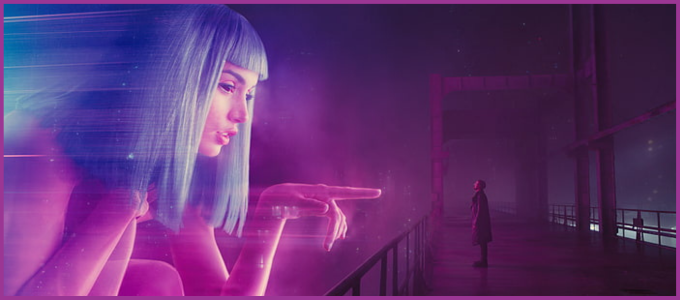
In art, she’s The Birth of Venus. In film, she’s Marilyn Monroe and Rita Hayworth and the Swedish blonde in the fountain in La Dolce Vita, and she’s languid Brigitte Bardot. Voluptuous and endless, she’s the promise of transcendence, or dissolution, or the end of a life spent in exile. In our time, she’s Margot Robbie — the ‘you’ve arrived’ blonde in The Wolf of Wall Street, and Barbie. She’s Sabrina Carpenter… though here the world turns. Sabrina’s self-possessed: she keeps the spoils of Aphrodite, we don’t, and we don’t quite fall in love with her. Sydney Sweeney’s your more classic sell-out-to-the-male-gaze, but even then you can smell the cynicism down to her soapsuds. Things were purer in the twentieth century; they don’t try to fake Aphrodite innocence now. Each molecule of the Goddess is repurposed by those she visits, and is funnelled into messaging and brand. Maybe the last great Aphrodite was Ana de Armas in BladeRunner: infinite, empathic, fifty foot tall, and always there when you need her. How could the Goddess ever be better? De Armas, in this film, was AI. The comfort of unconditional beauty in a post-apocalyptic world. I guess AI is the final remaining place we can fashion images of women who genuinely seem to love us with no visible autonomy of their own.
Absent or present, Aphrodite is a Goddess. And she is a spirit.
But she’s not the symmetry or dimensions of a Marilyn, but the skirt blown skywards and the giggle. She’s the field that encompasses you, the haze in which you miss your train. She’s pink madness as James Hillman put it—laughter and bubbles and Happy Birthday, Mr. President; tonic in the dry dry deserts of men. Though she is never the woman herself—some of the most astonishing women I’ve known could never be photographed—she’s the aura that comes down and surrounds and engulfs you, and her, and the rest of all who look onwards. Innocence and longing-quench entwined.
There is no moral problem to loving Aphrodite. Perhaps her greatest gift is how she arouses the very male innocence I’m spending this whole email dismantling. Men, overwhelmed and uplifted, and reminded of love!
There is no moral problem to loving Aphrodite. Just a huge list of practical ones!
—
When you’re caught-up chasing real-world Aphrodites:
1. The Aphrodite-field wears off, by design. It was just a honeymoon phase!
2. She uses Aphrodite to rope you in, but the Goddess who governs the next fifty years of her life is someone else entirely. She pulled the wool right over your eyes!
3. You’re so smitten by her appearance you think she is Aphrodite, and you’ve no sense for the living person beneath. ‘But Jordan,’ she says as she lets me down kindly. ‘I’m just a normal girl!’ I couldn’t see.
4. You become ‘so good with women’ that you open the dormant Aphrodite within her in ways she cannot maintain alone, which begets an upsetting form of dependency. More of a subtle thing, but if you know, you know.
Aphrodite isn’t a woman but a spell, or a curse, that descends and leaves two or more bewildered humans, stranded in her wake.
5. So you expect your partner to fit the mold you have for her more than she does, and you get resentful when she fails to. I thought she was a Goddess, but she wears trackpants, and watches that awful TV…
6. And Aphrodite, so the myth goes, is susceptible to other men. Eight children by five different Gods, all while married?
But all women are like that, they say. Nope. Other Goddesses have low interest in betrayal. It’s Aphrodite. But Aphrodite does not cheat out of malice: part of the nature of love is that love is opened by strong intent.
That yielding, that release of boundaries into love and the way she magnifies your strength as she surrenders—the precise thing you love most about her—is exactly what will cause her to open to the next desiring guy. It’s her softness that stings so very badly, and every true lover knows that you can only play to win with this Goddess if you’re happy to play to lose.
7. Aphrodite fuels the whole seduction drama:
Men get hung up on approach addiction, or one-night-stand addiction, because they’re more excited about the benediction they receive from an Aphrodite-projection, or the coursing victory of taking her to bed, than actually having a relationship and discovering how tricky and complex and ungoddess-like she is. Our entire neurology lights up in the Aphrodite phase; far less brightens later. If she remains a perfect image who smiled and opened as you said that thing to her… an ephemeral moment on your last night, say, in Ipanema… she never breaks the spell you needed to have in your body, and you can keep your moment with the image forever.
For some men it’s really important, the drama of being able to say how close you flew to the sun.
8. Aphrodite doesn’t teach us much about consequences: she appears, envelops you into a sensual moment, and evaporates into a holy eternity. Fertility without family! There is no coffee breath, no pregnancy test, no charge to the card, no all-night at the clinic.
Similarly, there are no consequences of ‘success with women’ in Zan’s book (apart from maybe feeling a bit sad when you depart), and consequences were the one thing I wanted him to put in. Men often ask us how to ‘handle’ the annoying stuff that comes with getting closer to a woman, as if we can minimise irritation and optimise for laughter and bubbles. All my successes with Aphrodite were short-lived: I’d always rub up against my avoidances and small-mindedness and my power-trips—as well as her own little cycles and logic-traps—and I had no idea what to do when Aphrodite flew out of the window and left different Gods in possession of me and my lover. Aphrodite frees a man of all responsibility—isn’t this oblivion what we all seek at the bottom of sex?—but I thank my travels. I went out in search of the Platonic ideal and, every single time, her hands on her hips at the crack of the following morning, an altogether different Goddess stared back.
I could go on. And it could get darker.
But I wonder: what if 80% of your romantic and sexual troubles could be solved
by releasing the conflation between “women” and Aphrodite?
And seeing, instead of a haze or a trick or a promise, the person left when the field clears
right from the very start.
* * *
In Search of a Vaster Pantheon…
The men who experience what I would call actual intimate lives are those who, despite loving the beauty of Aphrodite, realise a different sort of Goddess brings out the best of them.
I often hear myself saying that true beauty is non-obvious, that I tend to find her between the cracks.
Whatever my fixation on Aphrodite types in the past, I recognise I’ve long been better loved by other Goddesses:
Athena — who revels in strategy and trickery, and delights in my mind,
Persephone — who sits with me in the underworlds of emotional depth.
Even Hestia — the calm home to my ridiculous, ungrounded travels.
An Athena-Hestia-Persephone, that’s who I’ll order from the pantheon app!
Just one who loves to play Aphrodite, on vacations and birthdays and date-night.
—
Given all this, if you still want to win in the field of Aphrodite…
… you’re probably going about it all wrong.
In the next email I’ll explore why ‘getting better with women’ is causing my guts to curdle, which God actually wins the race for Aphrodite’s surrender, and how these archetypes play out in the men I know, and in you.
This is not just about the archetypes you desire in women,
It’s about how the Gods shape what’s unconscious in us, govern our every assumption, and ultimately shape our world.
~ Jordan
* * *
Australia, for the first time ever…
I’ll be in Sydney on Saturday 26th September.
Interested in a Salon or a Private Consultation? DM me to book.
A rich afternoon. Dinner after. Amorati and long-time readers, in one room, seeing ourselves and women through a completely different lens.
I also heard the muses whisper…
There’ll be Salons and Privates in New York, South Florida and Austin. October.
—
* * *